What Is an Apostille? A Clear Guide to Obtaining One for Translated Documents

When you submit translated documents overseas, the receiving organization may ask you to obtain an apostille on the translated document.
But many people are unsure: "What is an apostille?" and "How do I get one?"

This article explains, in plain language, what an apostille is and how to obtain one for a translated document.

What Is an Apostille?

An apostille is a form of international certification used to confirm that a Japanese-issued document is legitimate when submitted to a foreign country.

It is a simplified authentication that is recognized between countries that have joined the Hague Convention (*).

* Formally known as the "Convention Abolishing the Requirement of Legalisation for Foreign Public Documents."

Public Documents vs. Private Documents

The type of document matters when applying for an apostille. Documents fall into two broad categories:

  • Public documents: documents issued by a government office or public authority.
    Examples: family registers (koseki), academic transcripts from public schools, certificates of registered matters.
  • Private documents: documents created by individuals or private organizations.
    Examples: translated documents, contracts, letters of recommendation.

The key point is that an apostille can in principle only be obtained on "public documents".

How to Obtain an Apostille on a Translated Document (Private Document)

You cannot attach an apostille directly to a private document such as a translation.
Instead, you must follow the steps below.

1. Have the Document Notarized at a Notary Office

First, take the private document to a notary office for notarization. This certifies that the document was created by the stated person and that its contents are valid.

2. Obtain an Apostille on the Notarized Document

Next, obtain an apostille from the Ministry of Foreign Affairs on the notarized document.
At this stage, the private document is treated as a "public document."

[Notary Offices in Tokyo] Notarization and Apostille Can Be Filed Together!

In fact, some notary offices in Tokyo offer a service that handles the apostille application together with notarization on your behalf.

With this option, you do not need to visit the Ministry of Foreign Affairs separately, and everything is completed in a single procedure—making it very convenient.

* Availability differs by office, so we recommend calling ahead to confirm.

Summary

  • An apostille is part of an international document authentication system.
  • Public documents can have an apostille attached directly.
  • Private documents require "notarization → apostille."
  • Some Tokyo notary offices can handle both steps in one visit.

When submitting translated documents overseas, first check whether each document is private or public, and then follow the appropriate procedure.

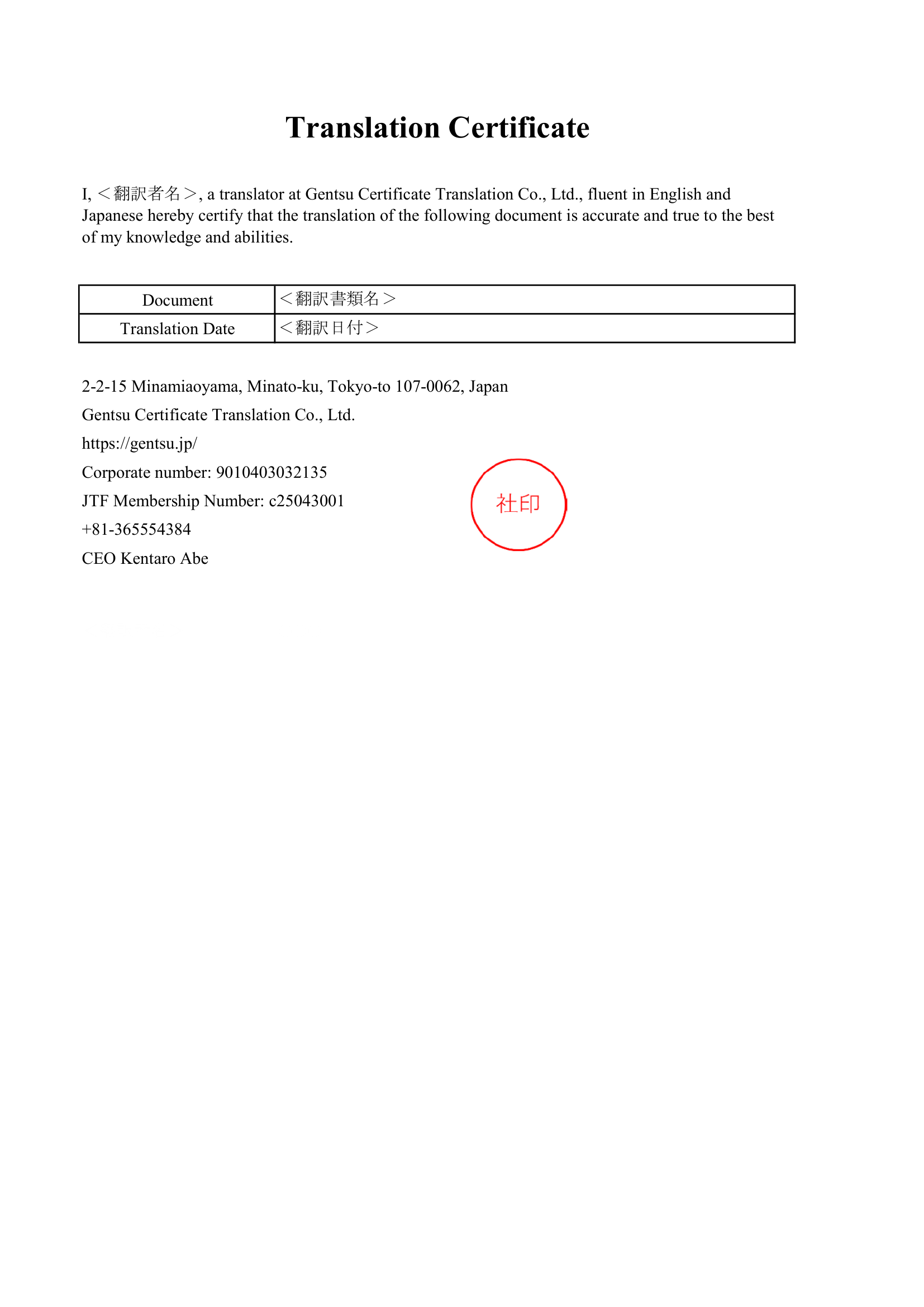
In addition to translation, we also offer notarization and apostille procurement services.

Please feel free to contact us.

← Back to Blog

CUSTOMER VOICES

Customer Voices

We have received many positive reviews from our customers. Here are some of them.

Related Articles

CONTACT

Free Quote / Contact Us

Please contact us from the form below.
We usually reply during business hours.

Business days are counted from the next business day, except same-day delivery.

If you choose translation only, the translator name, signature, and company seal are not included.

Document images or PDFs (JPG, PNG, WebP, PDF, up to 10 files)

Your personal information will be used only to respond to your inquiry and will not be shared with third parties.

Quick chat Free quote via LINE
LINE Free Quote Email Free Quote